
Station 1K–1
Sensory Exploration
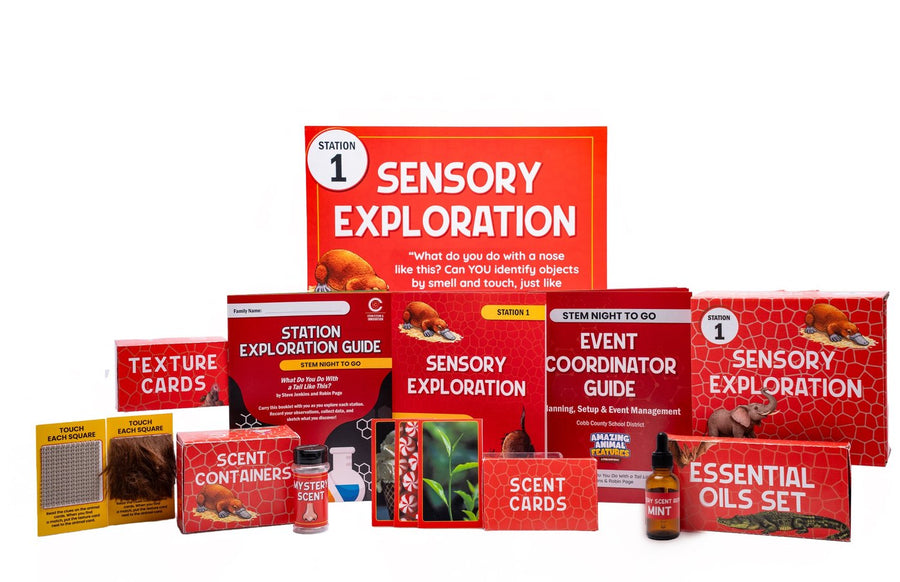
Sniff six mystery scents and match animal textures by touch alone.



Turnkey STEM Experience
Six hands-on stations, every material, printed signage, a step-by-step guide for every facilitator, and online training that shows anyone how to run them. One kit serves up to 150 participants.
No electricity at any station, no food anywhere, and nothing to source but a short list of everyday supplies. Version 1 is Amazing Animal Features, built around the Caldecott Honor picture book What Do You Do With a Tail Like This? by Steve Jenkins and Robin Page.
Ships complete in seven containers — six station totes plus a master resource box.
A named event support contact, from the day you order through event day.
Reusable year after year. Only the everyday consumables run out.
Purchase orders and tax-exempt paperwork welcome.
STEM Event TO GO
Call 866-381-1760 Monday to Friday, 9:00 to 5:00 Central, or send a note and a person who knows the work will answer.
Shipping
The experience ships as seven containers — six station totes and a master resource box. Tell us your event date when you order and we will confirm the delivery window in writing.
Support
Every order gets a named contact at Central Creativity from the day you order through the day you host. Call 866-381-1760, Monday to Friday, 9:00 to 5:00 Central. A person picks up.
Purchase orders
We quote formally for purchase orders, with line items, shipping and any volume pricing you qualify for. Send tax-exempt documentation with the request and we will apply it to the quote.
Still deciding?
The full experience page walks through every station, the room layout and what a two-hour window actually looks like. Or call and we will talk it through.
Six stations. One tote per station. Every material, every printed sign, a guide for every facilitator and a training video for every activity. You pick the date — the hard part is already done.
Seven containers arrive on one pallet. Open them and you are holding a finished event.
A deliberately short list — the things that spoil, get used up, or that every school already owns. All of it is named in the guides with quantities, so nothing is a surprise the week of the event.
Version 1 · Amazing Animal Features
Every station answers a question from What Do You Do With a Tail Like This?, the Caldecott Honor picture book by Steve Jenkins and Robin Page. The book is not in the kit — most elementary libraries already own it, and the guides give three ways to work it in.
Station 1K–1
Sniff six mystery scents and match animal textures by touch alone.
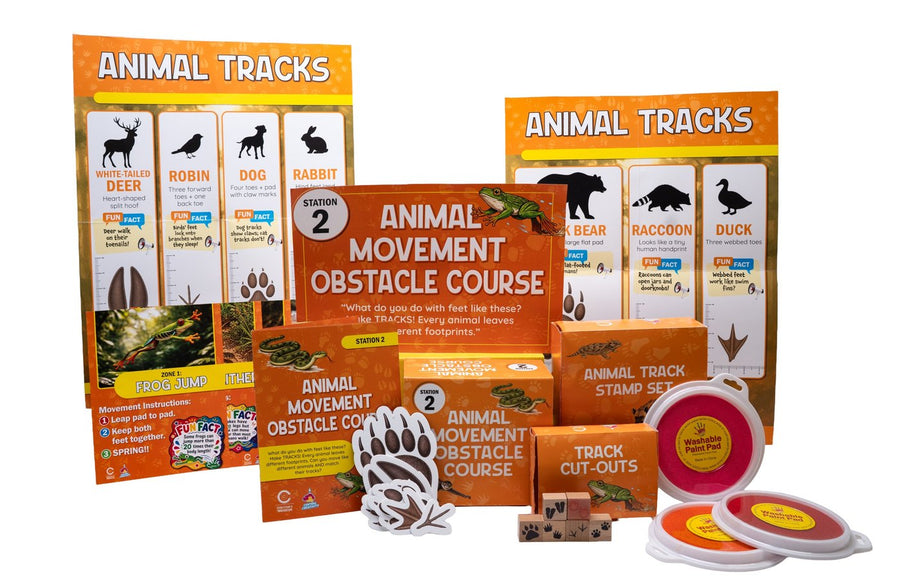
Station 2K–1
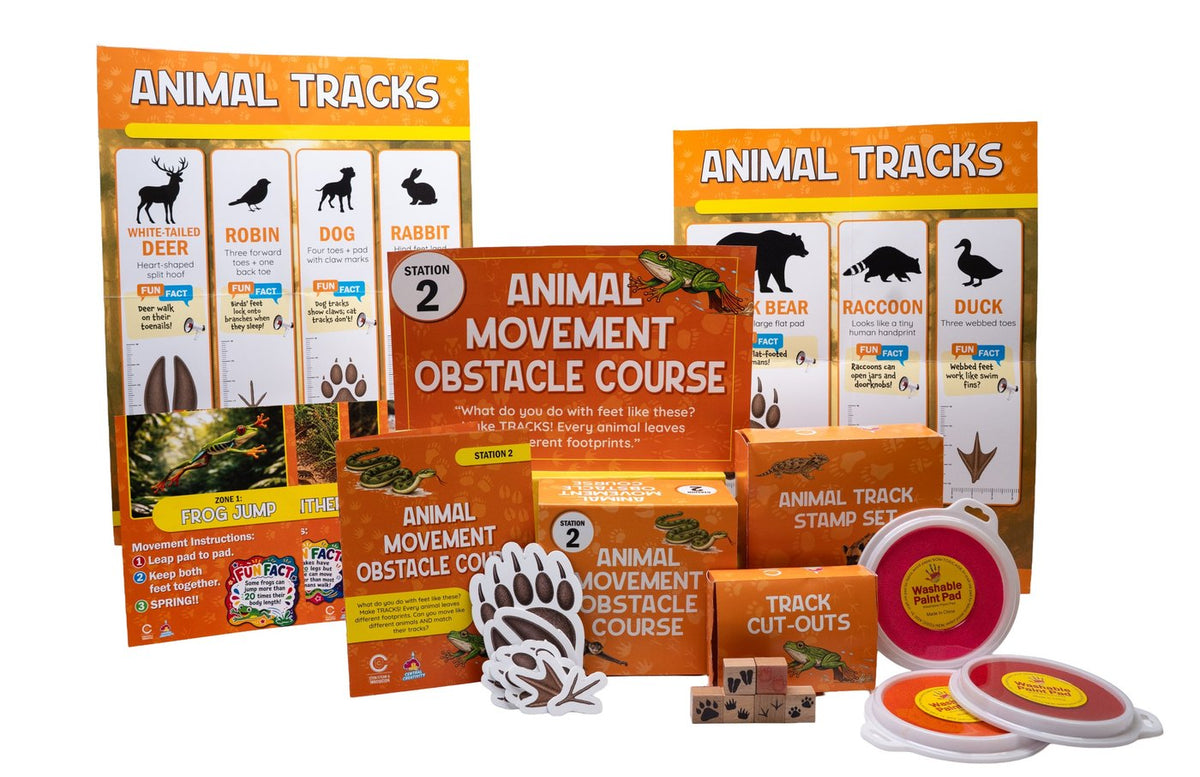
Read real animal tracks, then move through a four-zone course the way those animals move.

Station 32–3
Press shells, leaves and feathers into clay and watch a fossil form.

Station 42–3
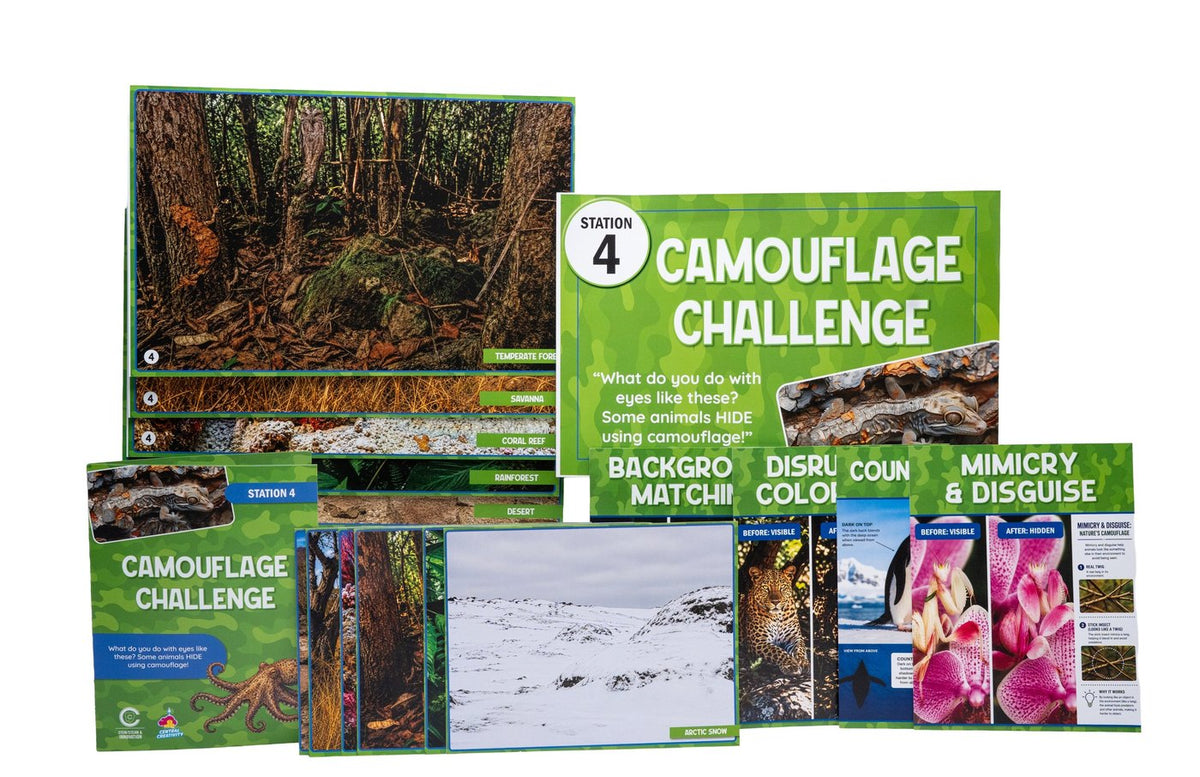
Hunt for animals hiding in six habitat scenes, then design one that disappears.

Station 54–5
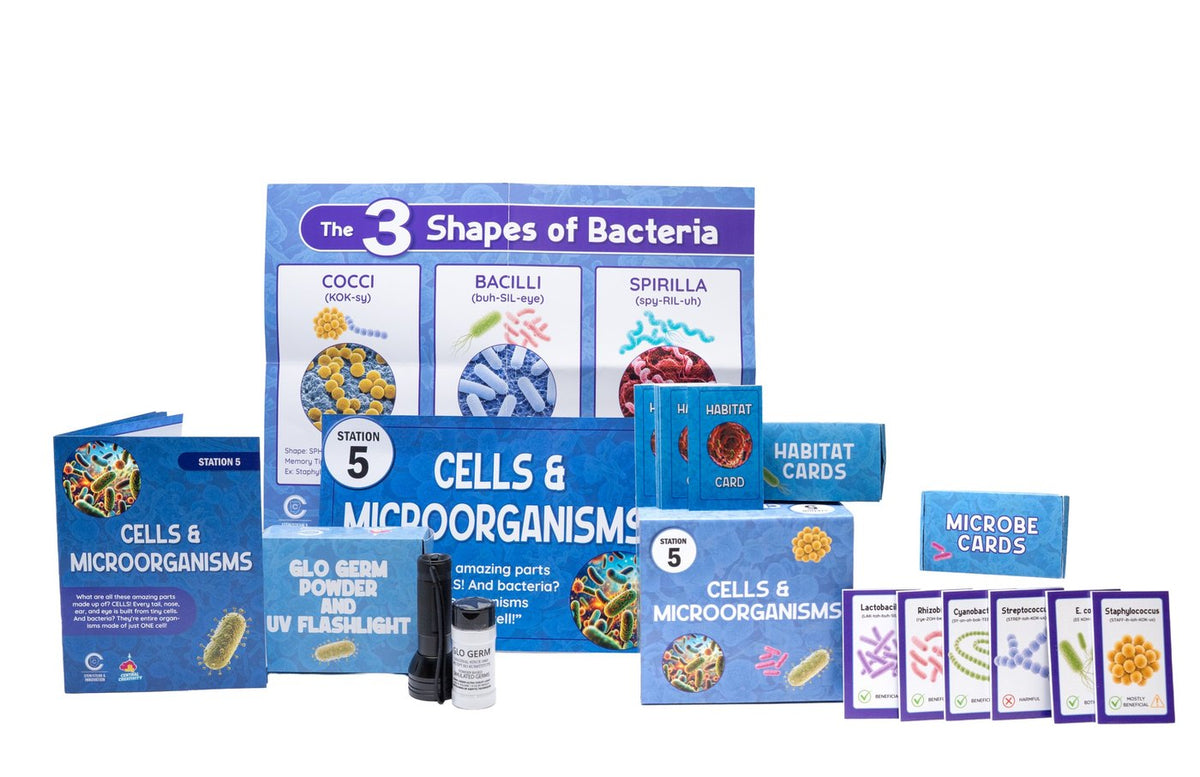
Match microbes to their habitats, then switch on the UV light and watch germs glow.

Station 64–5
Build a structure out of craft sticks and clothespins strong enough to hold a textbook.
A STEM event fails in one of three places — the materials are thin, the volunteers are lost, or the planning eats a month. This is built so that none of those is your problem.
Everyone who walks in
Studio-printed station signage. Photographic texture cards and six habitat scenes big enough to lose an animal in. Actual essential oils, a real UV flashlight, wooden track stamps, child-size rolling pins. It looks like a museum brought it in — which is the reaction you want in the first thirty seconds.
The volunteers running the tables
Every Station Leader Guide carries the script, the materials checklist, the setup diagram and the background science for one station. Nobody reads sixty pages to run one table, and nobody has to know the science beforehand — there is a training video for every activity. A parent volunteer can do this cold.
Whoever has to plan it
A planning calendar and a promotion calendar. A room layout with three table configurations per station. A setup timeline by the quarter-hour, a facilitator role chart, an optional welcome script and a post-event checklist. Plus the honest list of what you still have to buy, with quantities.
And there is no long lead time. The kit ships complete and ready to run. What sets your date is how much notice your own audience needs — not how long we take.
You need one adult per active station. Parent volunteers work well in the role — the Station Leader Guide carries the script, so no science background is required. If you are short, run fewer stations rather than leaving one unstaffed.
Spread the stations across several classrooms. Station 2 is the one that wants room, and it works in a hallway or outdoors.
No food is used anywhere in the experience. Station 1 uses essential oils for smelling only — nothing is ingested — and a child with sensitivities can do the texture half of that station instead.
Yes. Everything but the consumables is reusable, and the consumables are the short list of everyday items above. Repack the totes at the end using the post-event checklist and the kit is ready for the next event.
No. The same six stations run as a daytime field trip rotation, an after-school club session, a library or community event, a booth set at a fair, or a grade-level enrichment day. The come-and-go format is what makes it flexible.
Yes. Ask for a formal quote and we will put it in writing with line items, shipping and any volume pricing you qualify for. Send your tax-exempt documentation at the same time and we will apply it to the quote.
Want the long version?
Room layouts, the complete planning calendar, what a two-hour window actually looks like, and every station in detail.
See the full experience Request a quote
Or call 866-381-1760 and talk it through.